


Does Your Commercial Property Need Annual Backflow Testing? Massachusetts Requirements Explained
Most business owners spend very little time thinking about their plumbing systems, and that's usually a good thing. When everything is working properly, water flows where it's supposed to and daily operations continue without interruption. However, certain components quietly play an important role in protecting both your property and the public water supply. One of those components is the backflow preventer.
If you've received a notice about annual testing or recently heard about backflow requirements, you're not alone. Many commercial property owners throughout the Springfield area have questions about why testing is required and what happens if a device isn't working properly. Understanding the basics can help you stay compliant and avoid unexpected problems down the road.
Understanding What Backflow Is
Under normal conditions, water flows in one direction. Municipal water systems are pressurized so clean water moves from the public supply into your building's sinks, appliances, irrigation systems, and equipment.
Occasionally, pressure inside the public system can change. A nearby water main break, emergency fire hydrant use, or other sudden event can create a drop in pressure. When that happens, water inside a building's plumbing system can potentially reverse direction and flow back toward the public water supply.
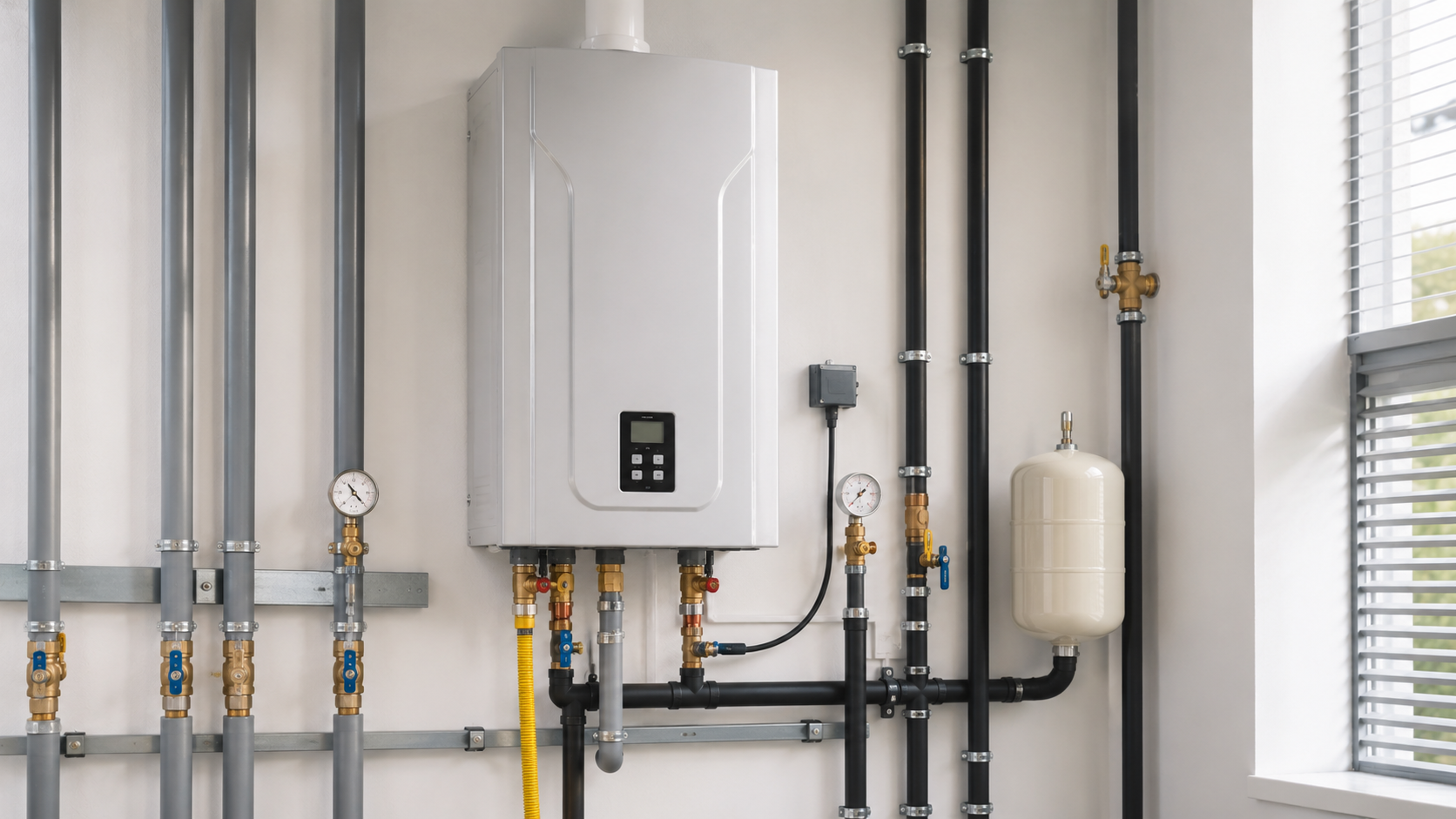
That's where backflow prevention devices come in. These mechanical assemblies are designed with one-way valves that automatically close if a pressure change occurs. Their job is simple: keep anything inside the building from contaminating the drinking water system.
Why Commercial Properties Need Annual Testing
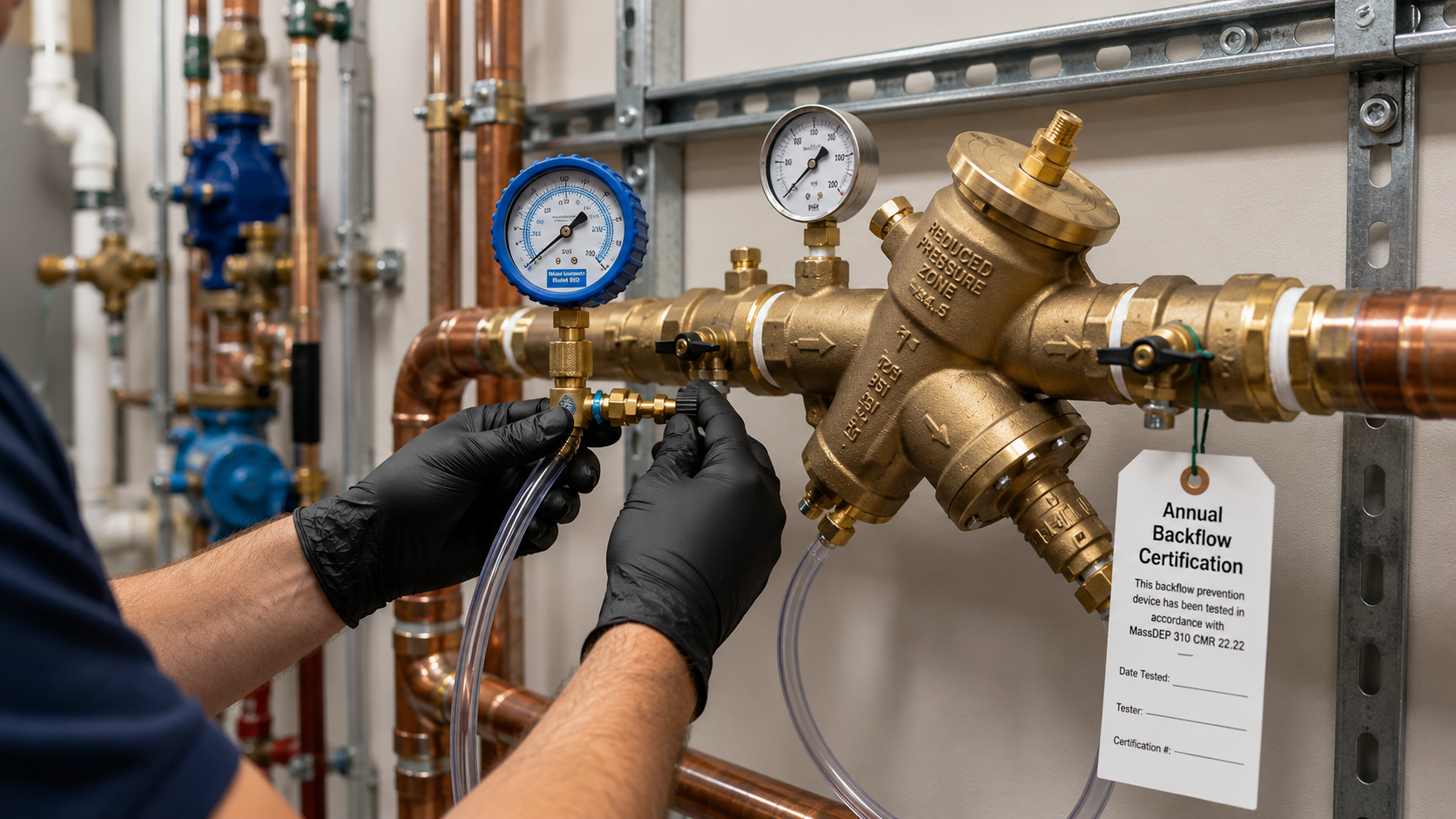
Massachusetts requires many commercial, industrial, and institutional properties to maintain and test their backflow prevention devices. Local water departments and agencies, including the Springfield Water and Sewer Commission, enforce these requirements to help protect the public water supply.
Restaurants, apartment buildings, medical offices, office parks, and properties with irrigation systems often fall under these regulations. Depending on the type of device installed, testing may be required annually or, in some cases, twice per year.
For many property owners, annual backflow certification simply becomes another part of routine building maintenance. The process itself is usually straightforward, and regular testing helps identify small problems before they become larger ones.
Small Repairs Are Better Than Big Problems
Most backflow assemblies are extremely reliable, but like any mechanical component, they experience wear over time. Internal seals, springs, and rubber parts eventually need attention.
Fortunately, a failed inspection doesn't always mean a complete replacement is needed. In many situations, a professional backflow preventer repair can restore the device and allow it to pass certification again. Catching these issues early often helps property owners avoid larger expenses and keeps everything operating properly.
Massachusetts regulations also place importance on timely repairs. If a device fails testing, action needs to be taken quickly. Delaying repairs can eventually lead to service interruptions, which is something no business wants to deal with.
Whether you manage a restaurant, medical office, apartment complex, or office park with irrigation systems, staying ahead of testing requirements helps provide peace of mind and protects your investment.
Common Questions About Backflow Testing
How long does a backflow test take?
Most tests take only 10 to 15 minutes per device and create very little disruption to business operations.
Do apartment buildings require annual testing?
Yes. Multi-family properties with shared water systems are commonly subject to annual testing requirements.
Can a failed device be repaired?
In many cases, yes. A licensed technician can often perform a backflow preventer repair by replacing worn internal components rather than installing an entirely new assembly.
Who is allowed to perform the testing?
Backflow testing must be completed by a certified tester who is authorized to inspect and document the device.
Is annual testing really necessary?
Regular testing helps ensure the device is functioning properly and protects both your building and the public water supply. It also helps maintain compliance with local requirements.
Stay Ahead of Your Next Inspection
Annual testing doesn't have to be stressful. With proper maintenance and timely inspections, most backflow prevention devices continue providing years of dependable service.
Hurley Plumbing provides certified backflow testing Springfield MA businesses depend on, along with annual backflow certification, backflow preventer repair, and a full range of commercial plumbing services. If you've received a notice or simply want to stay ahead of your next inspection, our experienced team is here to help. Contact Hurley Plumbing today to schedule service and keep your property protected.